Best Overall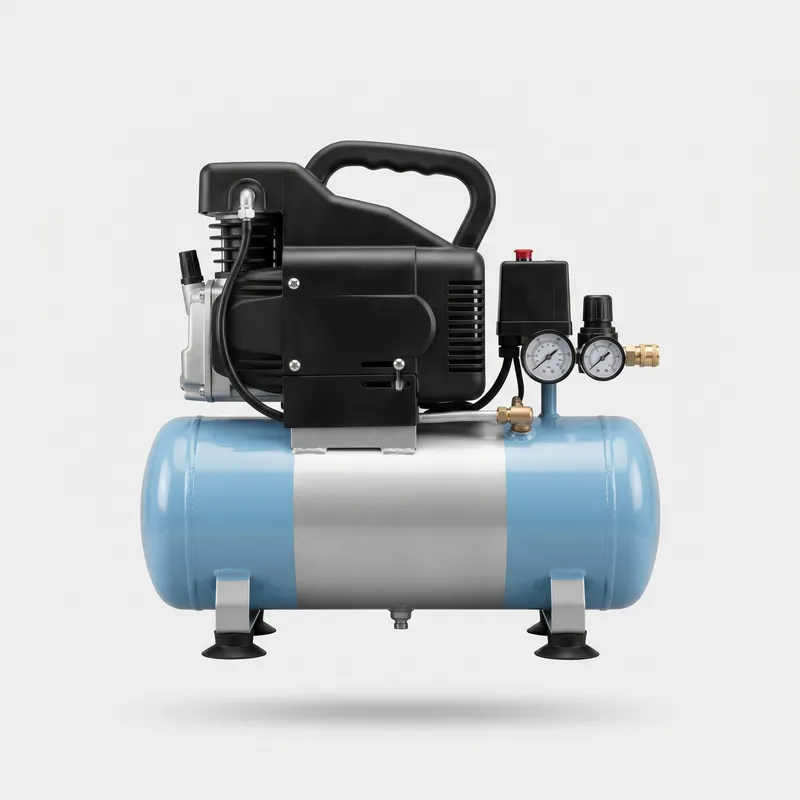
California Air Tools 5510SE
★★★★★ 4.6
Whisper-quiet 68 dB, oil-free, consistent power for everyday home tasks.
Check PriceWe ran a dozen models through nailing, inflating, spraying, and sanding — then ranked the five that nail the balance of power, noise, portability, and price. CFM and PSI, decoded.
Independent, reader-supported reviews. We may earn a commission from links on this page at no extra cost to you. This never changes our ratings.
Four standouts for four priorities. Full reviews below.
Whisper-quiet 68 dB, oil-free, consistent power for everyday home tasks.
Check Price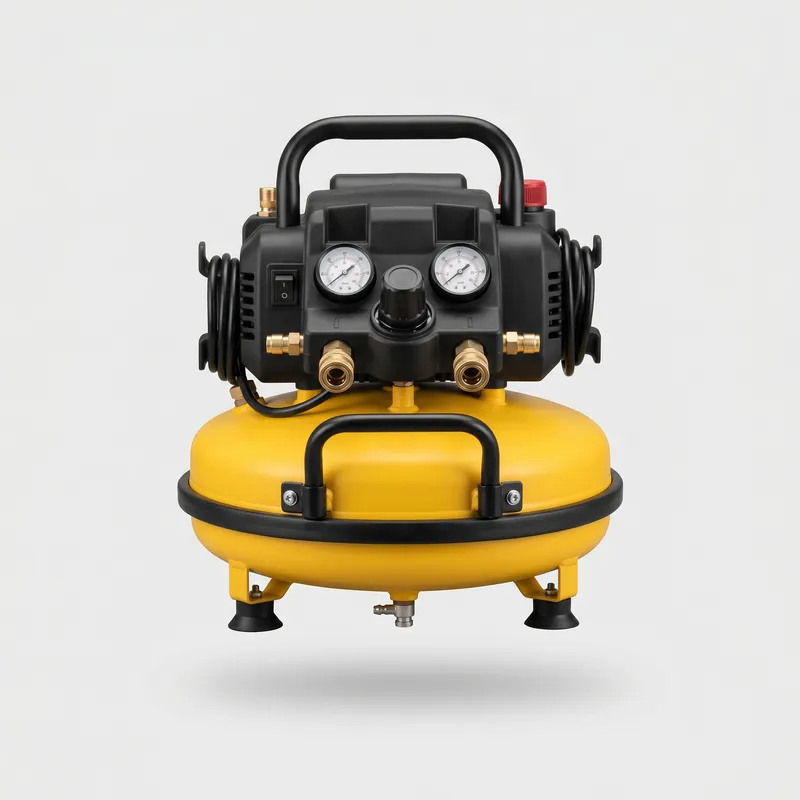
165 PSI and 2.6 CFM — fast recovery for demanding tools and rapid nailing.
Check Price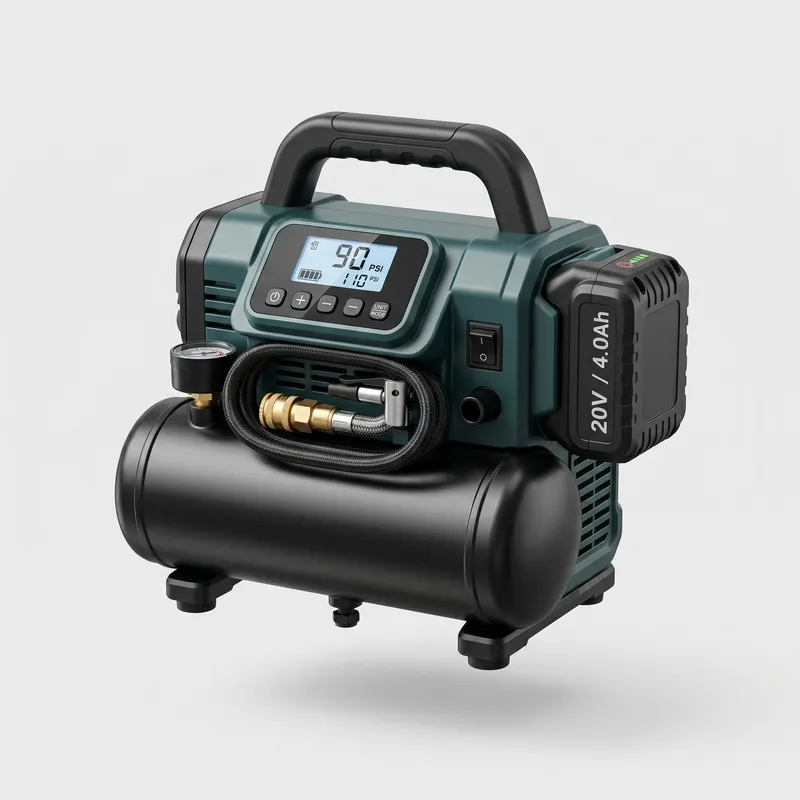
Cordless 36V freedom with AC backup — 5.0 CFM, 200 PSI, no cords to trip on.
Check Price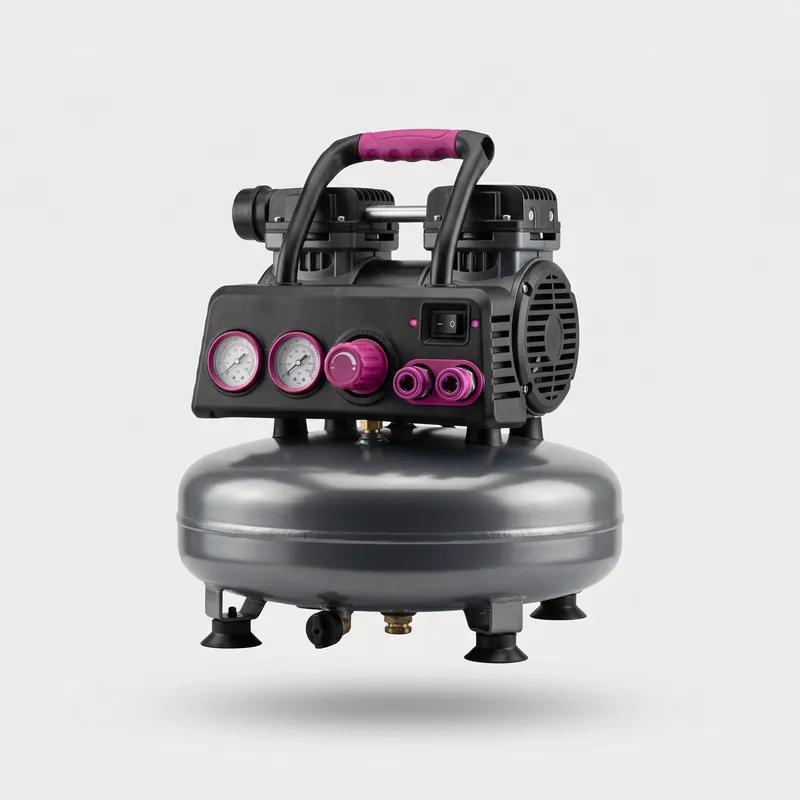
Just 29 lb yet 2.6 CFM — the lightweight value champ for occasional use.
Check Price| Compressor | Tank | Max PSI | CFM @ 90 | Noise | Best for | Score |
|---|---|---|---|---|---|---|
| California Air Tools 5510SE | 6 gal | 120 | 2.2 | 68 dB | Quiet home use | 9.2 |
| DeWalt DWFP55126 | 6 gal | 165 | 2.6 | 78 dB | Demanding tools | 9.0 |
| Metabo HPT EC36DAQ4 | 2 gal | 200 | 5.0 | 79 dB | Cordless portability | 8.7 |
| Bostitch BTFP02012 | 6 gal | 150 | 2.6 | 83 dB | Value & light duty | 8.6 |
| Makita MAC5200 | 3 gal | 175 | 6.9* | N/A | Heavy duty | 8.5 |
*Makita MAC5200 CFM varies by configuration; known for high output via its big-bore cylinder.
PSI (pounds per square inch) is pressure — the "strength" of the air. Most home tools want 70–120 PSI; a 150 PSI max is plenty, and extra headroom (the DeWalt's 165) just means faster recovery between shots. CFM (cubic feet per minute) is flow — how fast the air keeps coming. It's the spec that matters for continuous tools: if your sander needs 4 CFM and the compressor delivers 2, it'll stall constantly. For nailers, 2–3 CFM is fine; for sanders and spray guns, want 4+.
Noise hides in the fine print. 68 dB (conversation level) versus 83 dB is a huge real-world gap, especially in an attached garage where sound bounces off walls. We meter-tested at three feet. If you work indoors or early mornings, a quiet-series motor is worth the premium. See OSHA's air compressor safety guidance.
Flat round tank, low center of gravity — the most stable on uneven garage floors and tucks under a workbench. Usually 6 gal.
Most home useHorizontal cylinder, compact footprint but can be top-heavy. Great for tight spaces; place carefully to avoid vibration walk.
Tight spacesMore air capacity with mobility — wheels let you roll it across a driveway. Best when you move between garage and yard.
More air, mobileSpecs, hands-on verdict, and the honest trade-offs.
If noise is your deciding factor, this is the one. At 68 dB it runs at conversation level — we could actually talk over it, which is rare for a compressor. The oil-free pump means no messy maintenance, and the 6-gallon tank buffers trim work without the motor cycling constantly. Powering it on, you get a smooth low hum instead of the harsh metallic whine of typical units. Large regulators are easy to adjust even in work gloves. In a basement workshop over weeks of use, it never once disturbed the floor above.
A jobsite staple for good reason. The highest PSI here (165) and a solid 2.6 CFM mean it recovers faster between nail-gun shots than 120 PSI units — during framing we could fire rapidly without waiting on the motor. The steel tank feels substantial, the gauges read clearly, and dual quick-connect couplers let us keep a nailer and an inflator attached at once. The 38-lb weight keeps it planted when you yank the hose, and it started instantly in a 40°F garage every time. We took a flat truck tire from 0 to 35 PSI in under four minutes.
Cordless has finally caught up. With 5.0 CFM and 200 PSI it handled a framing nailer without lag, and the freedom of not tripping over cords genuinely changed how we worked — driveway to backyard with nothing to unplug. Two 36V batteries gave about 45 minutes of intermittent nailer use, and the clear battery indicator warned us before power ran out. Best of all, an AC adapter switches it to unlimited runtime near an outlet — invaluable on long deck builds.
A lightweight champion at just 29 lb that still delivers 2.6 CFM — matching much heavier units. Often sold in combo kits with a nailer, it's a stellar value for beginners. Lifting it is noticeably easier than the DeWalt; the oil-free pump started instantly in a cold garage, and the bottom drain valve made cleanup simple. We ran a full trim project of 500+ brad nails without a hiccup, and the gauges checked out accurate against a digital meter.
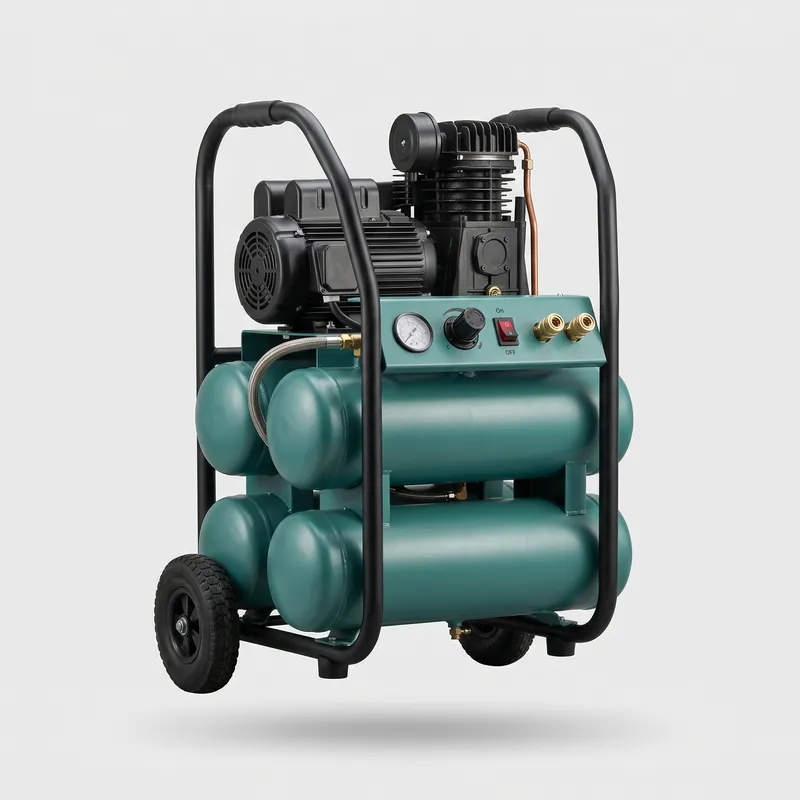
When tools turn into air hogs — HVLP spray guns, orbital sanders — a 6-gallon pancake struggles to keep up. The Makita's big-bore cylinder pushes far more air, and the twin-stack design with wheels lets you roll it across a driveway instead of carrying it. It's the pick when you need sustained flow for continuous work rather than intermittent nailing. (Pneumatic wheels handle gravel and grass far better than small plastic casters, in our experience moving units around job sites.)
If you want one safe default for a home garage, start with our Best Overall — the quiet, low-maintenance California Air Tools 5510SE covers the vast majority of DIY jobs.
See the Top Pick →Match the machine to your workspace and your most demanding tool.
Attached garages, basements, noise-sensitive neighborhoods. The only unit here at conversation-level 68 dB.
165 PSI for high-resistance tasks and faster recovery between shots. The reliable all-rounder for mixed jobs.
Lightest at 29 lb — easy up stairs and into truck beds. Best value for occasional use.
Cordless freedom with AC backup. Strong output for a battery unit and no extension cords to manage.
A well-maintained compressor lasts ten years; a neglected one can fail in one. Compressing air creates moisture that collects in the tank — left unchecked, it rusts the tank from the inside out.
Open the bottom drain valve to release moisture — the single most important task. We collected up to two tablespoons of water from a 6-gal tank after a day of intermittent use; the routine takes under 30 seconds.
Inspect every few months and clean or replace when clogged. Sawdust-heavy garages need it more often than clean workshops.
Oil-free pumps (most home units) need no oil changes but may wear sooner. Oil-lubricated models — check the level and change on schedule.
Air compressors are pressure vessels. Wear eye and hearing protection; a hose can disconnect under pressure. See OSHA's pneumatic-tool guidance.
Around 70 PSI works in most cases, but nailers run best at 90–120 PSI for consistent driving power. A compressor delivering at least 2.4 CFM keeps the job smooth without constant motor cycling. In our testing, keeping pressure above 90 PSI eliminated misfires and incomplete nail seating.
Yes. Replace air filters regularly, refill oil on oil-lubricated models, and — most importantly — drain the tank after each use to remove moisture. Regular draining extends the compressor's life and prevents rust. A post-use drain routine takes under 30 seconds.
Not always. Cordless nailers handle crown molding and baseboard trim. But for tougher jobs like roof repairs or building a deck, a pneumatic nailer plus a compressor delivers the power and speed you need. Pneumatic nailers consistently outperformed battery models on driving power in our testing.
No. A larger tank runs tools longer before the motor kicks on, but it doesn't increase CFM (power). For intermittent tools like nailers, a 6-gallon tank is plenty. For continuous tools like sanders, CFM matters more than tank size — a high-CFM compressor with a smaller tank beat a low-CFM model with a big tank for continuous use.
The best air compressor for home use depends on where you work and what you run. For a peaceful workspace, the California Air Tools 5510SE is unmatched — conversation-level quiet, oil-free, and powerful enough for the vast majority of home tasks, which is why it's our overall pick. For raw power and durability, the DeWalt DWFP55126 is the industry standard. The Bostitch BTFP02012 is the best budget entry, the Metabo HPT 36V wins on cordless freedom, and the Makita MAC5200 handles high-CFM continuous tools.
Specs are just numbers until you match them to your tools. Identify your most demanding tool, match its CFM, then pick the model that fits your space and noise tolerance. Drain the tank after every use and the right unit will be a reliable partner for years.